
Description
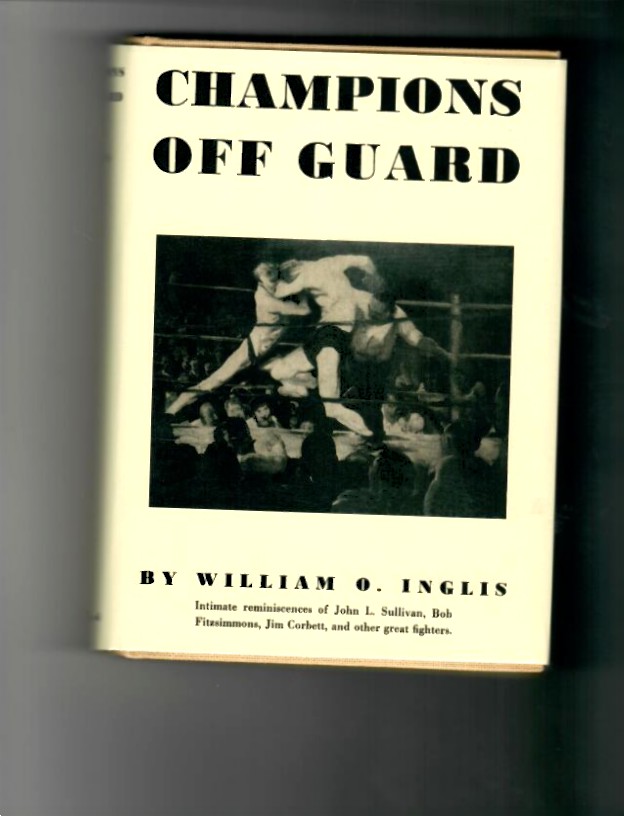
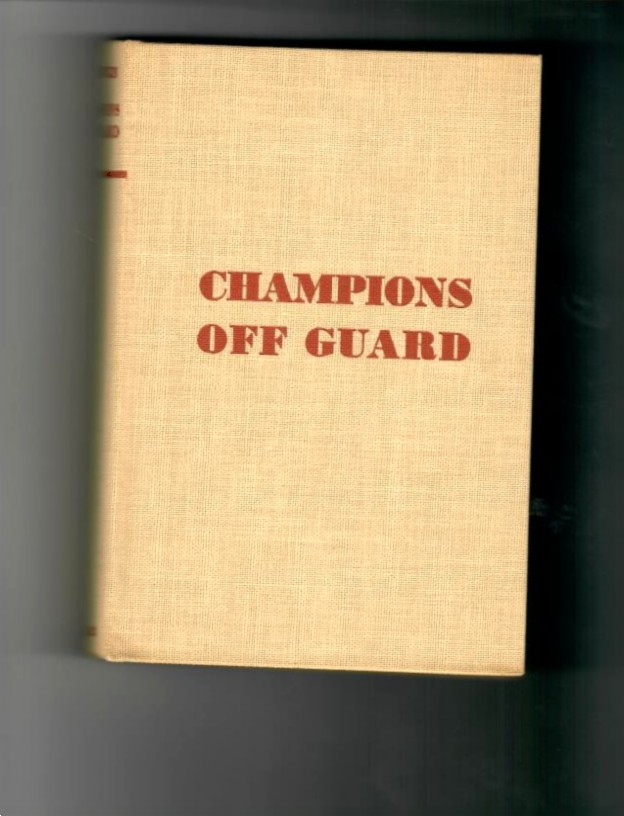
Inglis, William ‘Champions Off Guard. 1932 1st edition. 311-pages. The Vanguard Press, New York. VG+ hardcover in a brand new mylar protected FASCIMILE dust jacket. Great read!
Book Summary:
Champions Off Guard is a 1932 sports history book written by veteran American sportswriter William Inglis and published by The Vanguard Press. Drawing from his long career as a journalist—during which he personally knew, interviewed, and even sparred with many of his subjects—Inglis provides an intimate, narrative-driven history of the “Golden Age of Pugilism.”
Rather than focusing on the often grim or corrupt underbelly of professional prizefighting, Inglis consciously portrays the fighters as heroic, admirable figures of clean character and iron will. The book explores the legendary careers, personality traits, and behind-the-scenes lives of iconic boxing champions, featuring dedicated chapters and photographic plates of:
• John L. Sullivan (“The Mighty Sullivan”)
• Jim Corbett (“The Magic of Jim Corbett”)
• Bob Fitzsimmons (“Master Hypnotist”)
• Kid McCoy (and his famous “winning corkscrew” punch)
• James Jeffries (“The Gentle Grizzly”)
• Jack Dempsey (“The Dynamiter”)
• Gene Tunney (“Captain of Industry”)
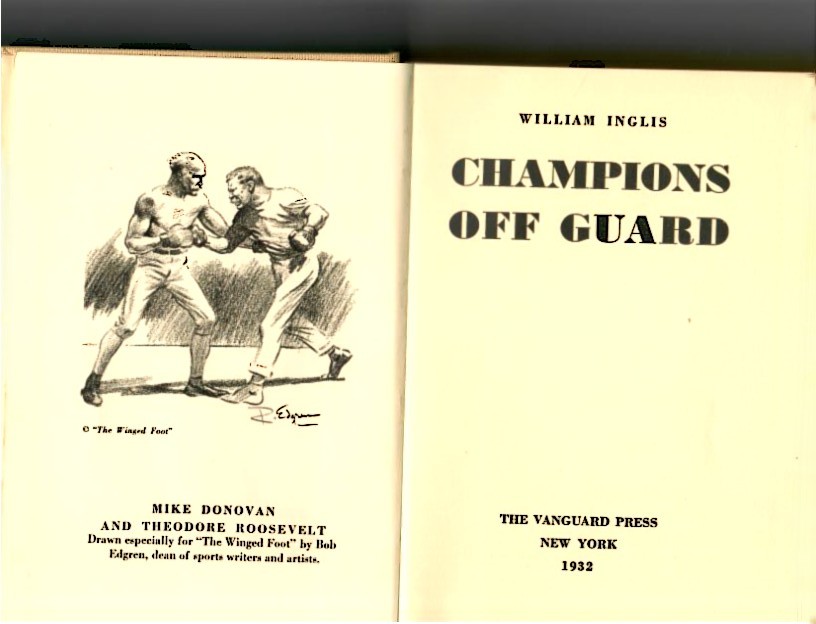
• Mike Donovan & Theodore Roosevelt (highlighting the President’s personal passion for boxing)
William Inglis did not just watch these fighters from the safety of the press box; he actively stepped into the ring and sparred with a great number of them. His firsthand, physical encounters are precisely what give Champions Off Guard its unique flavor. He uses his first-person sparring sessions as a literal narrative device to describe the physical sensations of facing the world’s greatest heavyweights:
• The Reality of Their Power: Rather than relying solely on secondhand statistics, Inglis details exactly what it felt like to be on the receiving end of their defense, speed, and punching power. For instance, he writes vividly about trying to land a punch on Jim Corbett and finding nothing but empty air, or feeling the sheer, crushing structural strength of a man like James Jeffries in close quarters.
• The Tactician’s Perspective: Because Inglis knew how to box himself, his descriptions of their styles are analytical rather than purely sensational. He translates the experience of a sparring partner into prose, giving the reader an insider’s look at the ring generalship, timing, and unique quirks (like Kid McCoy’s “corkscrew” punch) that made these men legends.
It is this specific element—the rare perspective of an articulate, professional writer who actually traded blows with the pantheon of Gilded Age champions—that makes the book highly prized by sports historians and keeps the value of a clean 1st edition strong.

Reviews
There are no reviews yet.