

Description
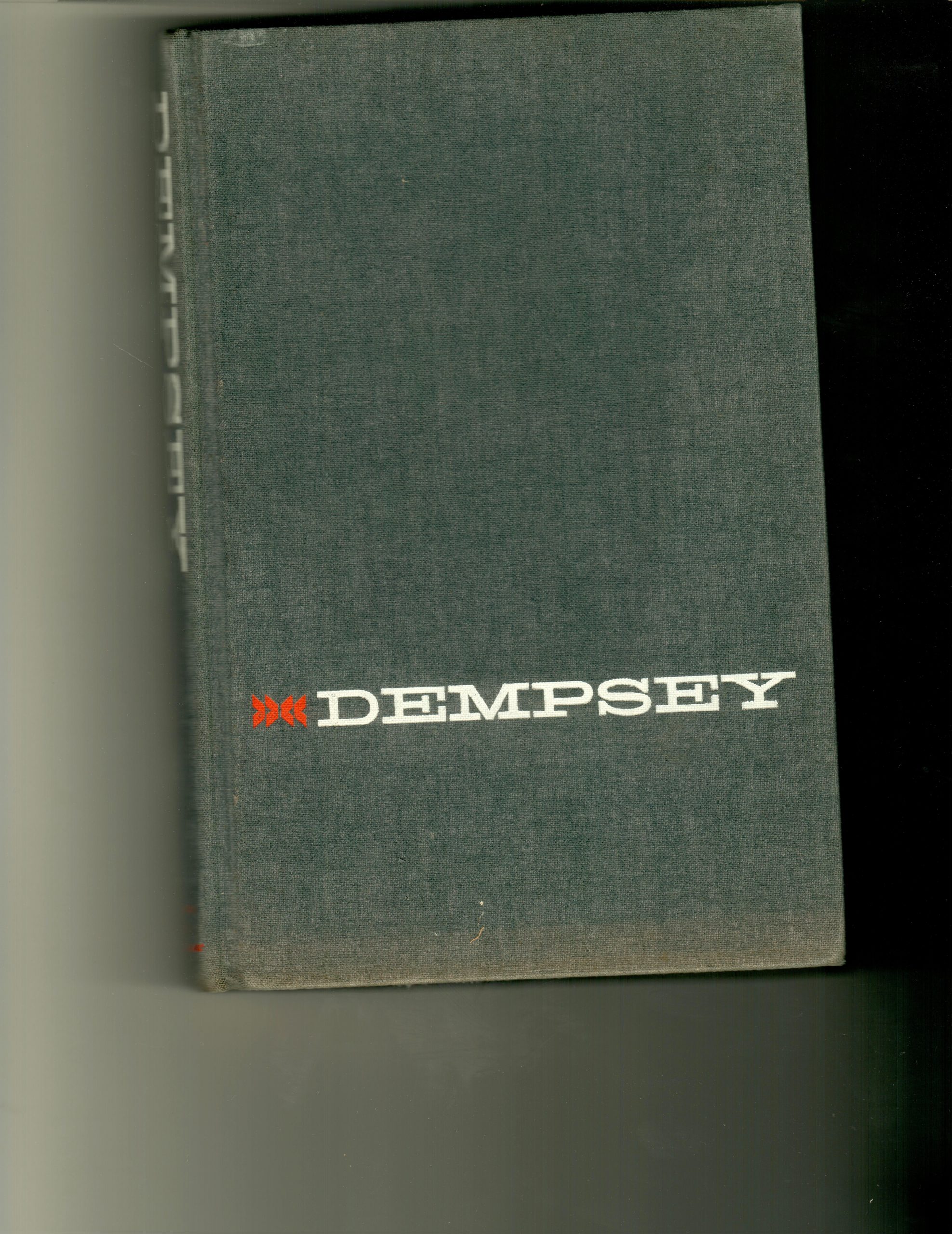
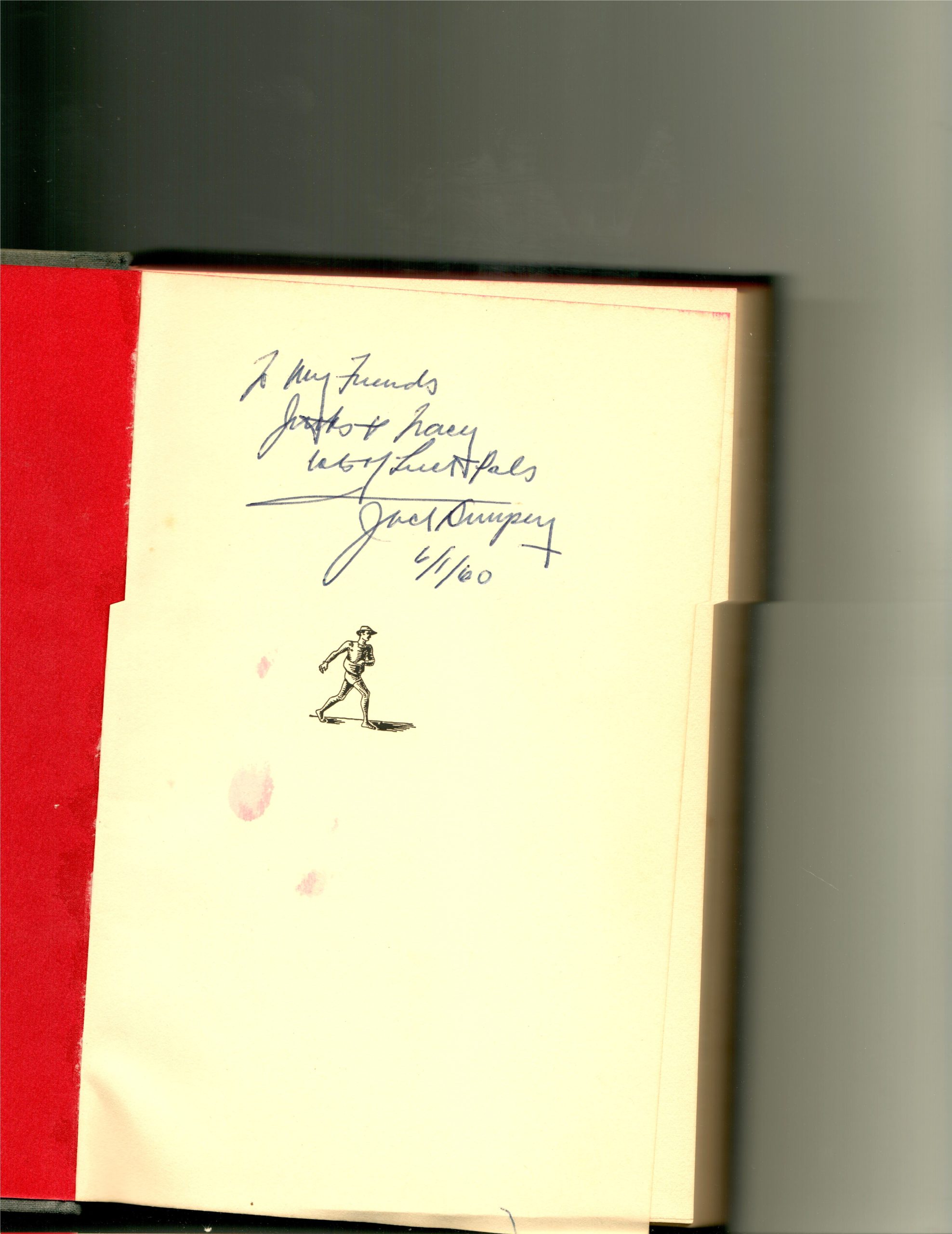
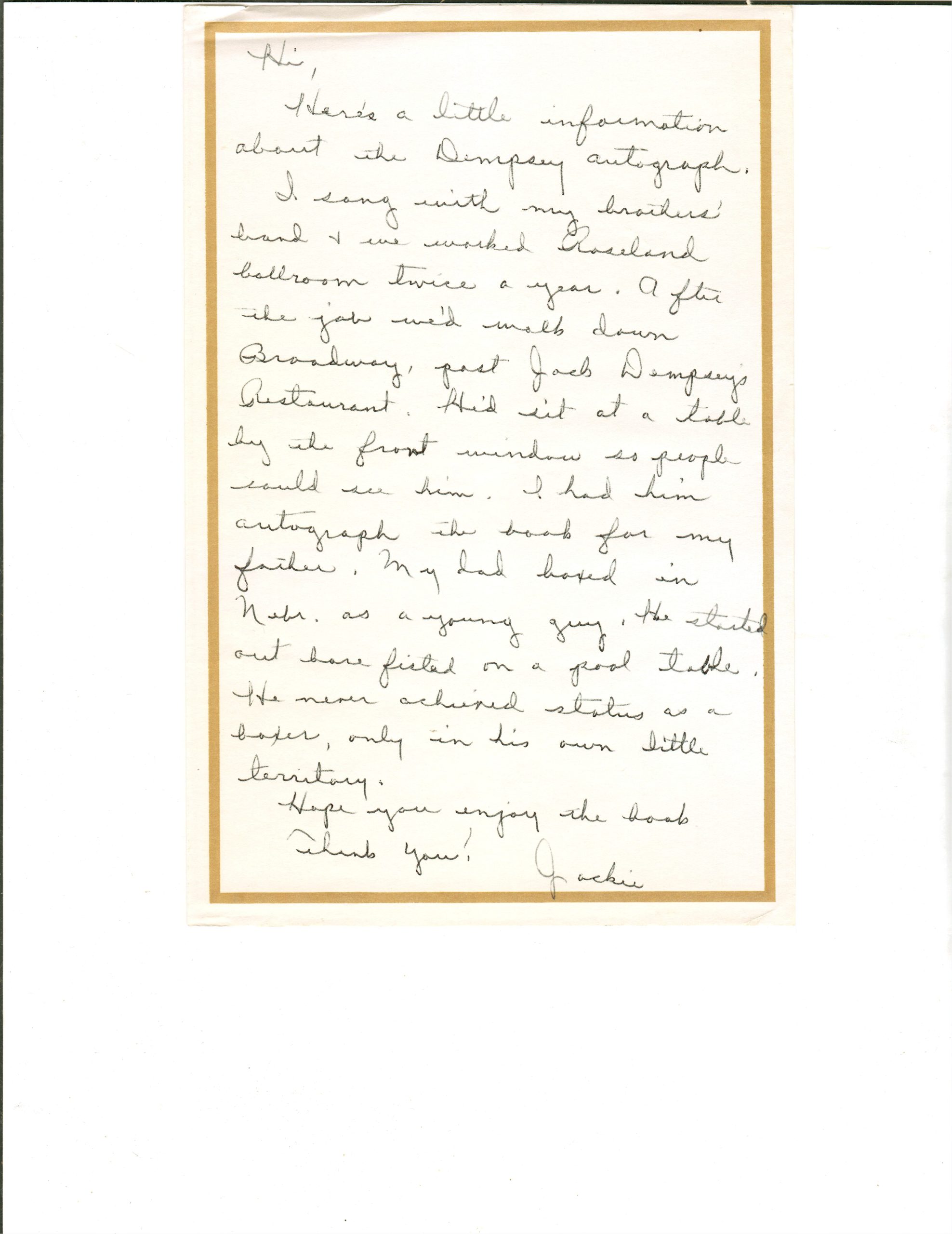
Dempsey, Jack ‘Dempsey’ 1960 1st ed. 249 pages. VG in good minus worn dust jacket with some minor chipping/tearing to corners top/bottom of spine. INSCRIBED “To my friends J…. *& Lacy lots of luck pals, Jack Dempsey 6/1/60.” Also includes a long-handwritten note laid inside the book from someone named Jackie, a singer in a local performing band, describing how she came to have Dempsey inscribe the book for her in his New York restaurant to give to her father who boxed when he was young.
Published 20 years after Round by Round, the 1960 book ‘Dempsey: By the Man Himself’ (published by Simon & Schuster) is a much more candid, retrospective, and narrative-driven look at the champion’s life. [1] (https://www.kubikbooks.com/pages/books/192790/jack-dempsey-bob-considine-bill-slocum/dempsey-by-the-man-himself)Collaborating with legendary American journalists Bob Considine and Bill Slocum, Dempsey provides a deeper look into the emotional highs and lows of his life, benefiting from the wisdom of being a 65-year-old elder statesman of sports.
Key Elements of the 1960 Biography
* A Rawer Look at the Early Years: While Round by Round focused heavily on boxing mechanics, this book leans into the raw human drama. Dempsey recounts the sheer desperation of his youth, detailing the hunger, the brutal street brawls, and how close he came to giving up on boxing entirely during his early, impoverished years traveling through western mining towns.
* The “Roaring Twenties” Era: This version places heavy emphasis on the culture of the 1920s. Dempsey reflects on being a towering cultural icon alongside figures like Babe Ruth and Bobby Jones, capturing the sheer scale of the million-dollar gates that defined his prime championship years.
* The Controversies and Heartbreaks: With two decades of distance, Dempsey addresses the complex elements of his life with greater honesty. He dives into the “slacker” accusations regarding his lack of military service in WWI, his highly publicized and volatile divorces, his falling out with manager Doc Kearns, and his definitive feelings regarding the infamous “Long Count” loss to Gene Tunney in 1927.
* Life as a New York Legend: A major addition to this book is his life after boxing. He reflects on his highly successful second act as a famous New York City restaurateur, where his Broadway restaurant became a hub for celebrities, mobsters, sports fans, and tourists alike.
How it Compares to ‘Round by Round’While Round by Round (1940) reads a bit like a manual for clean living, physical training, and boxing techniques tailored for young men, By the Man Himself (1960) reads like a modern sports biography. It focuses on the funny, hair-raising, and tragic moments of a life fully lived, trading technical fighting advice for rich storytelling and historical reflection.

Reviews
There are no reviews yet.