
Description
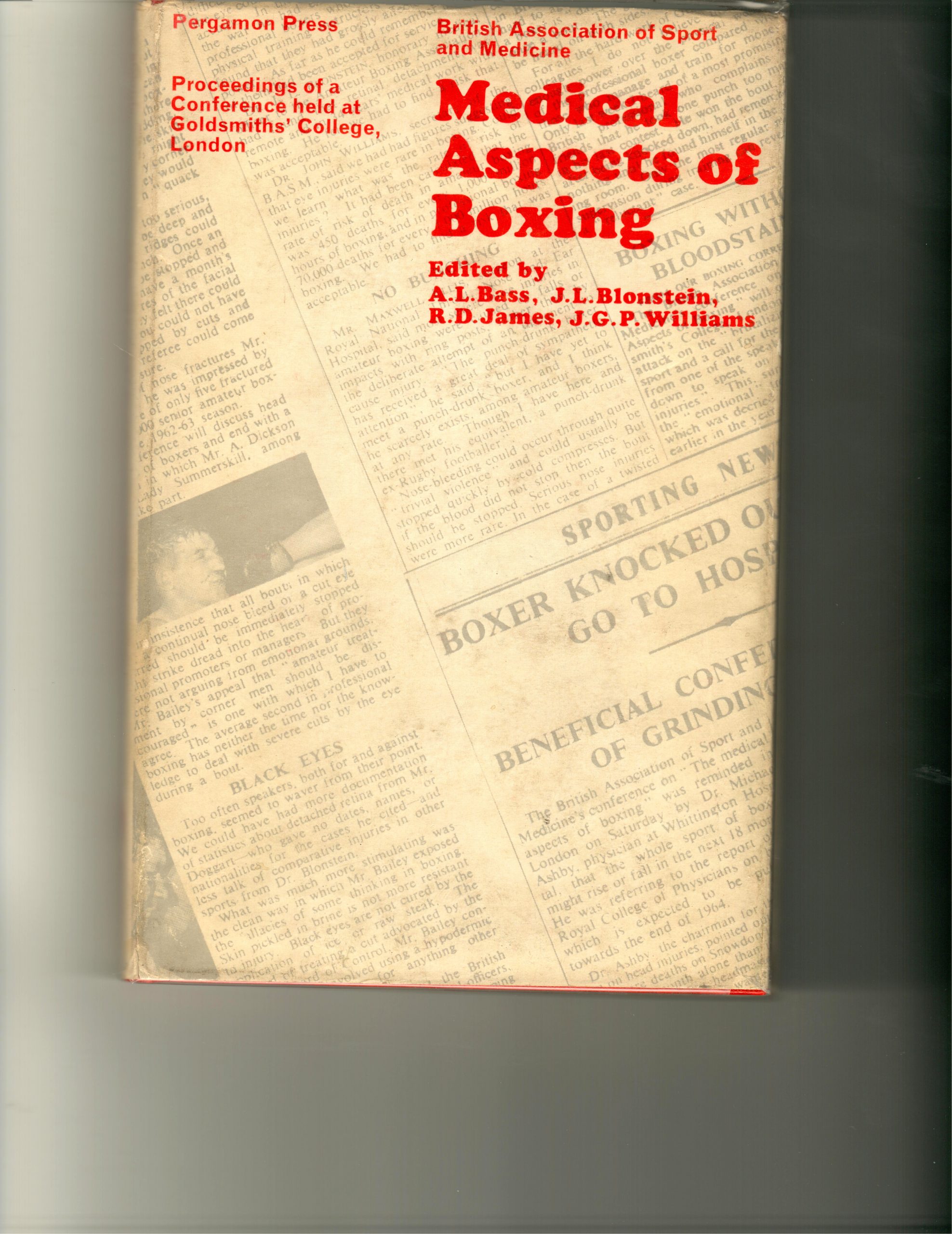
Bass, A.L. “Medical Aspects of Boxing’ 1965 1st ed. 121 pages. VG/G one with mylar protected jacket (2) $35 each.
The 1965 hardcover book titled Medical Aspects of Boxing (frequently referenced with its full title, The Medical Aspects of Boxing) is a critically important, highly specialized piece of mid-20th-century sports medicine literature. Rather than a single narrative, it serves as the official published proceedings of a landmark conference held by the British Association of Sports Medicine at Goldsmiths’ College, London, in November 1963.
Publication Details:
• Title: Medical Aspects of Boxing
• Editor-in-Chief: A.L. Bass
• Co-Editors: J.L. Blonstein, R.D. James, and J.G.P. Williams
• Publisher: Pergamon Press (Oxford, London, New York)
• Year: 1965
• Format: Hardcover
• Page Count: 124 pages
Context and Content:
Published during a decade when the medical community was fiercely debating the long-term safety and ethics of boxing, this book compiles peer-reviewed papers, clinical findings, and expert panel discussions from leading contemporary physicians, ringside doctors, and neurologists.
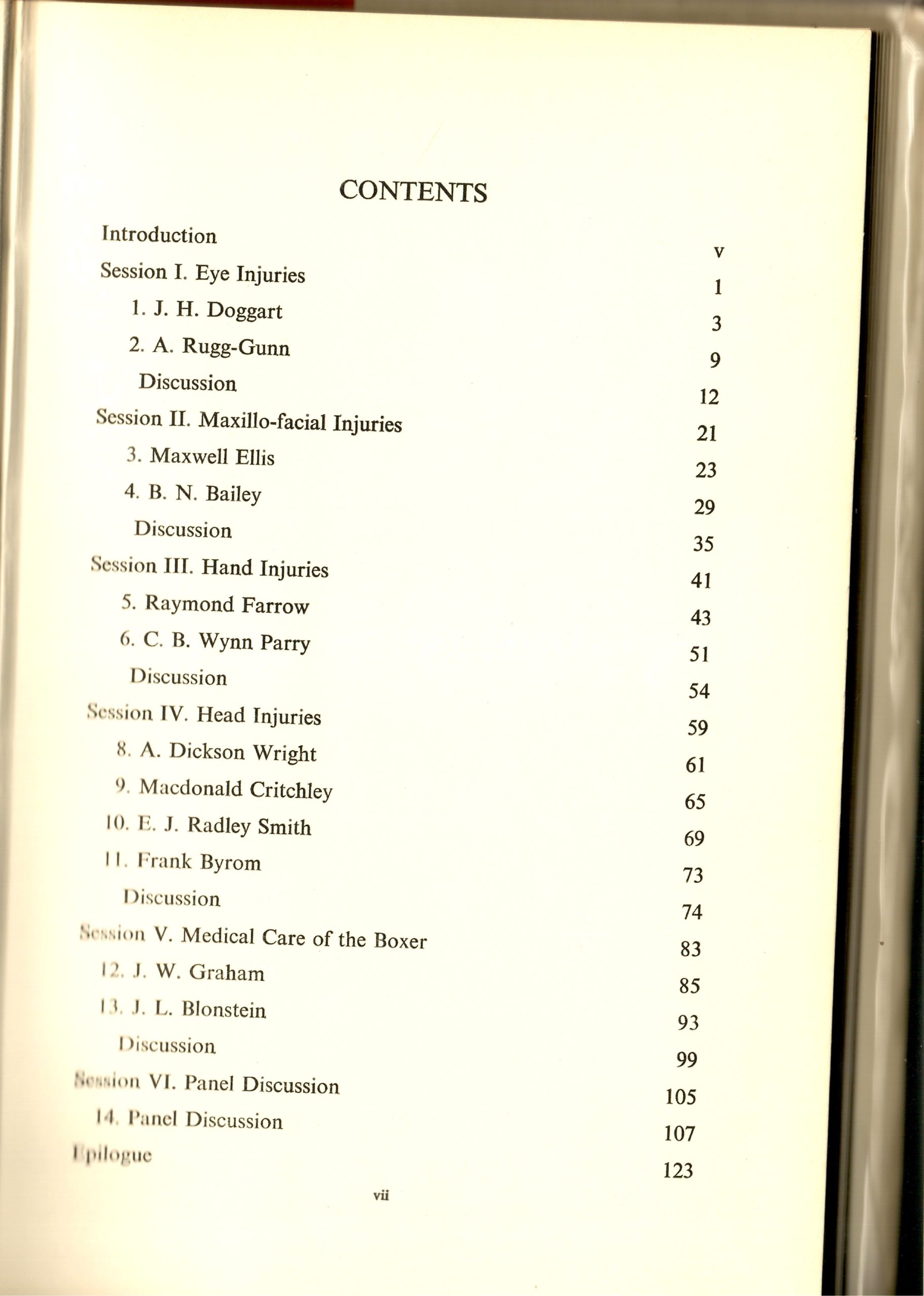
Key focus areas within its 124 pages include:
• Ophthalmological Trauma: Features dedicated chapters on eye injuries common to the ring, notably an influential section written by J.H. Doggart.
• Neurological Impact: Extensive clinical evaluations regarding acute and chronic brain damage, early electroencephalogram (EEG) tracking of fighters, and a data-driven look at the “punch drunk” syndrome (dementia pugilistica).
• Ringside Medicine: Practical guidance for tournament medical officers on how to evaluate fighters pre-and-post-bout, enforce safety safeguards, and manage acute ring trauma.
• Amateur vs. Professional Safety: Much of the data specifically targets safeguards in amateur boxing, looking at how strict rule enforcement and protective equipment can mitigate severe injury.
Physical Characteristics & Collectability:
• Binding: Issued by Pergamon Press in their standard technical/academic hardcover format of the mid-1960s, typically featuring simple cloth boards with sharp gilt or colored lettering on the spine.
• Layout: Highly scientific and structural. It relies on text-dense clinical reports, medical tables, and a few statistical diagrams rather than commercial sports photography.
• Scarcity & Value: Because it was a niche, academic publication intended for the medical and sports regulation community rather than the general public, it had a low initial printing run. Consequently, original copies are rare and command high prices among antiquarian book dealers, sports historians, and medical libraries.

Reviews
There are no reviews yet.