Description
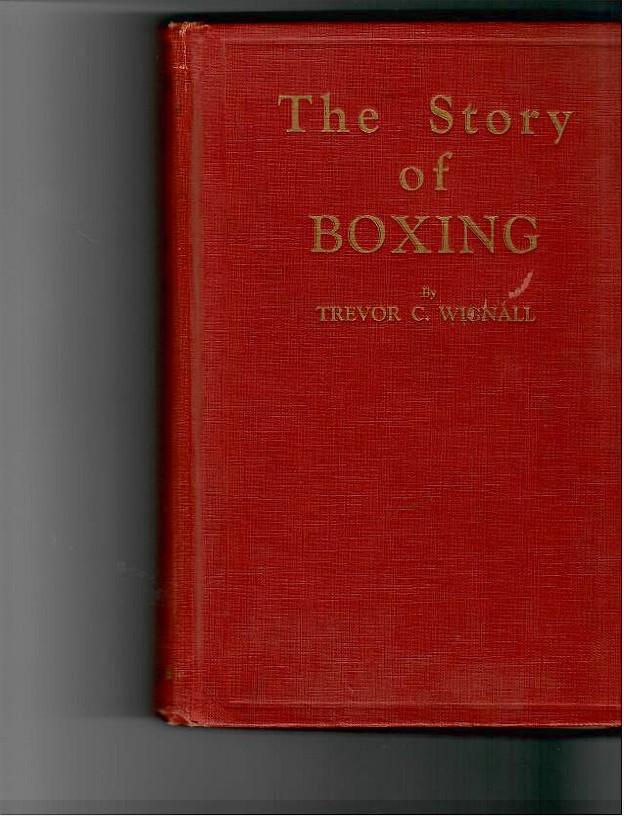
Wignall, Trevor ‘The Story of Boxing’ 1924 1st U.S. edition. Brentano’s, New York. 319-pages. 31 plates. Chapters: The Earliest Fighters, Broughton-Slack and The First Frenchman, Jackson-The First of the Gentlemen-The Belchers and Pearce, John Gully, Tom Spring, Bendigo, Big Little Men, A Great Champion, The Most Memorable Fight, James Mace – The Last of the Great Knuckle Fighters, The Ring in America, The Inventors of the Modern Style of Fighting, Coloured Fighters, Boxing in France, Men of Mark, Some Impressions, & Rules of Boxing. Good condition.
NOTE: The true 1st edition was the 1923 version published in London by Hutchinson & Co.
Book Overview & Material Specifications:
• Publisher & Year: Hutchinson & Co., London (1923). A US edition was subsequently released by Brentano’s in 1924.
• Physical Binding: Originally issued with a red cloth hardcover casing.
• Page Count: 319 text pages.
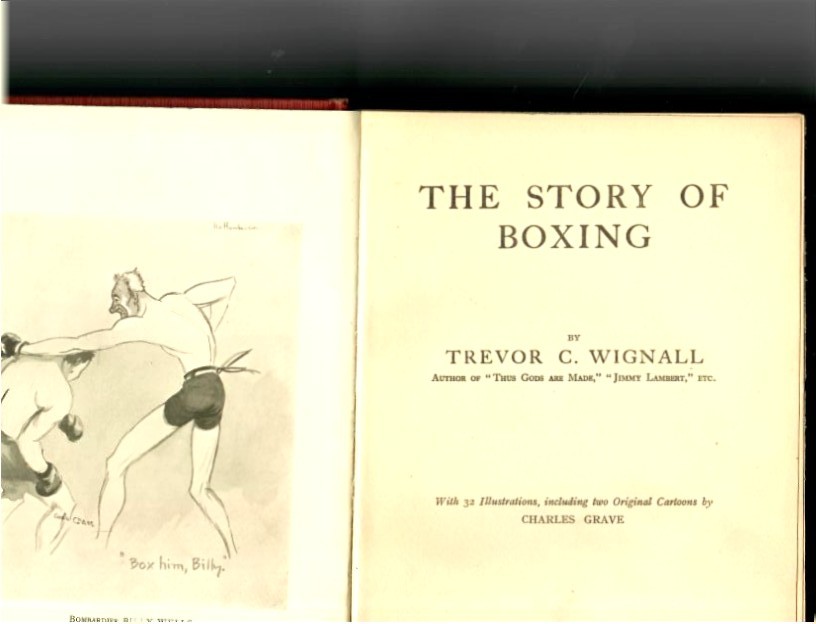
• Illustrations: The book features 32 black-and-white plates and photographic portraits of iconic fighters, including two original standalone cartoons drawn by the prominent illustrator Charles Grave.
Content & Narrative Scope:
Written by one of Great Britain’s most famous sports journalists, Trevor Wignall, the book is a highly descriptive chronicle charting more than two hundred years of boxing history.
• The Evolution of the Ring: Wignall tracks pugilism from its early, crude origins in the 18th century—spanning the brutal bare-knuckle days of “three doses of salts, three sweats, three vomits”—to the structured, commercialized training camps of the early 1920s.
• Legendary Lineup: The text details the lives, distinct styles, and era-defining matches of historical titans. Prominent features include:
• James Figg (the early master of cudgel and fist)
• Mendoza the Jew (the pioneer of scientific boxing)
• Jack Slack and the colorful Buckhorse
• “Gentleman” Jackson
• Heavyweight icon Jack Dempsey
• Philosophical Take: In its preface, Wignall offers a candid, famously unsentimental view of pugilism, evaluating professional boxers not as romantic combat sports stars but as “tradesmen” wielding their fists to buy expensive cars or afford their next meal.
• Appendix Materials: The back of the book preserves an official historical record of the contemporary rules of boxing active during the 1920s.
Wignall, Trevor ‘The Story of Boxing’ 1924 1st U.S. edition. Brentano’s, New York. 319-pages. 31 plates. Chapters: The Earliest Fighters, Broughton-Slack and The First Frenchman, Jackson-The First of the Gentlemen-The Belchers and Pearce, John Gully, Tom Spring, Bendigo, Big Little Men, A Great Champion, The Most Memorable Fight, James Mace – The Last of the Great Knuckle Fighters, The Ring in America, The Inventors of the Modern Style of Fighting, Coloured Fighters, Boxing in France, Men of Mark, Some Impressions, & Rules of Boxing. Good+ (2 copies, one with the book plate of English boxing author/historian Peter McInnes affixed on the inside of the front cover.) $40.00 each.
NOTE: The true 1st edition was the 1923 version published in London by Hutchinson & Co.
Book Overview & Material Specifications:
• Publisher & Year: Hutchinson & Co., London (1923). A US edition was subsequently released by Brentano’s in 1924.
• Physical Binding: Originally issued with a red cloth hardcover casing.
• Page Count: 319 text pages.
• Illustrations: The book features 32 black-and-white plates and photographic portraits of iconic fighters, including two original standalone cartoons drawn by the prominent illustrator Charles Grave.
Content & Narrative Scope:
Written by one of Great Britain’s most famous sports journalists, Trevor Wignall, the book is a highly descriptive chronicle charting more than two hundred years of boxing history.
• The Evolution of the Ring: Wignall tracks pugilism from its early, crude origins in the 18th century—spanning the brutal bare-knuckle days of “three doses of salts, three sweats, three vomits”—to the structured, commercialized training camps of the early 1920s.
• Legendary Lineup: The text details the lives, distinct styles, and era-defining matches of historical titans. Prominent features include:
• James Figg (the early master of cudgel and fist)
• Mendoza the Jew (the pioneer of scientific boxing)
• Jack Slack and the colorful Buckhorse
• “Gentleman” Jackson
• Heavyweight icon Jack Dempsey
• Philosophical Take: In its preface, Wignall offers a candid, famously unsentimental view of pugilism, evaluating professional boxers not as romantic combat sports stars but as “tradesmen” wielding their fists to buy expensive cars or afford their next meal.
• Appendix Materials: The back of the book preserves an official historical record of the contemporary rules of boxing active during the 1920s.