Description
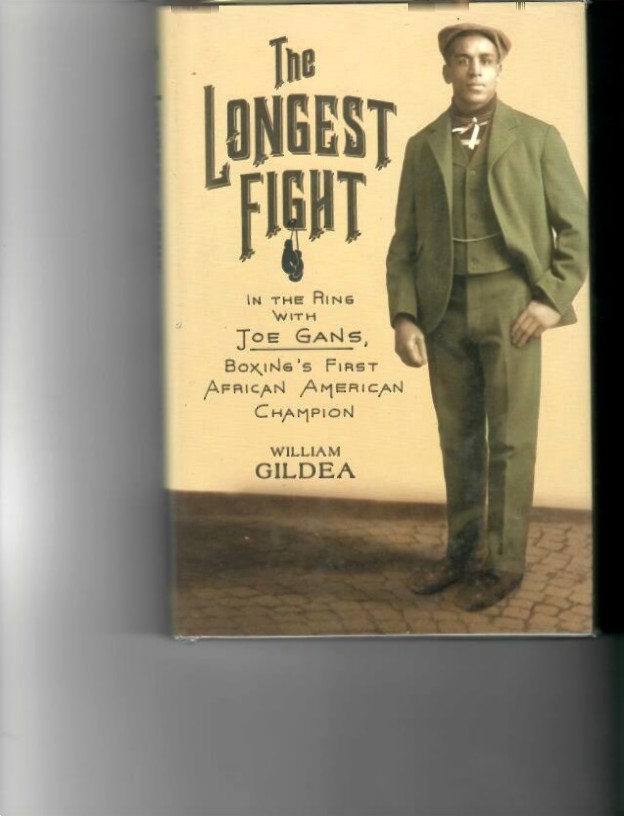
Gildea, William ‘The Longest Fight. In the Ring with Joe Gans, Boxing’s First African American Champion.’ 2012 1st edition. 245-pages. VG/VG . Another VG+ in a VG+ mylar protected jacket. $15 each.
The Longest Fight: In the Ring with Joe Gans, Boxing’s First African-American Champion is a 2012 narrative sports history book written by veteran Washington Post sports columnist William Gildea. Published in hardcover by Farrar, Straus and Giroux, the book shines a spotlight on a largely forgotten sports pioneer while reconstructing the longest championship boxing match of the 20th century.
The Centerpiece Bout: The book builds around an epic, brutal lightweight championship match held on a blistering 100-degree Labor Day in September 1906 in the gold-rush town of Goldfield, Nevada. Defending champion Joe Gans faced off against Oscar “Battling” Nelson, a vicious, racist, and intentionally dirty brawler. The grueling match lasted an astonishing 42 rounds across two hours and 48 minutes.
A Spectacle of the Era: Gildea captures the raw historical atmosphere of early 20th-century sports promotion. Orchestrated by a young Tex Rickard, the fight was billed aggressively as a “battle of the races”. It drew tens of thousands of spectators arriving via custom-built rail lines, dozens of live reporters, and an early camera crew whose moving picture film of the fight survives to this day.
The Broader Battle: Beyond the ring mechanics, the core theme of the book is the structural prejudice Gans faced as America’s first African American sports champion (reigning from 1902 to 1908). Gildea details how Gans had to navigate a world that belittled Black athletes while heavily profiting off them—including periods where Gans was forced by his own corrupt manager to purposefully pull punches or throw fights to survive financially.
Cultural Legacy: Mild-mannered, brilliant at defense, and highly tactical, Gans’s quiet poise paved the way for later color-barrier breakers like Jack Johnson, Jesse Owens, and Jackie Robinson. Gildea successfully argues that Gans deserves to be remembered as the original pride of Black American sports.