
Description
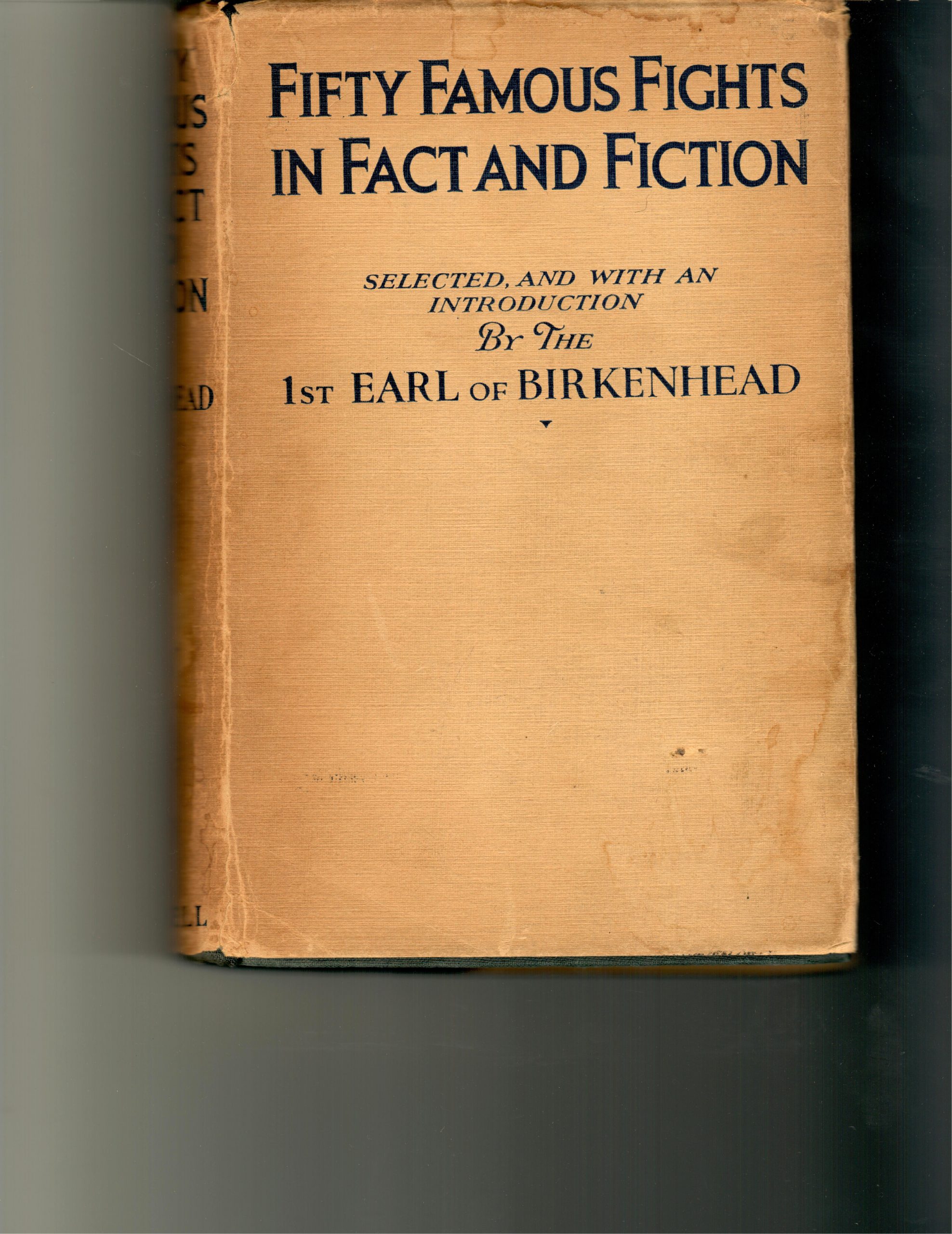
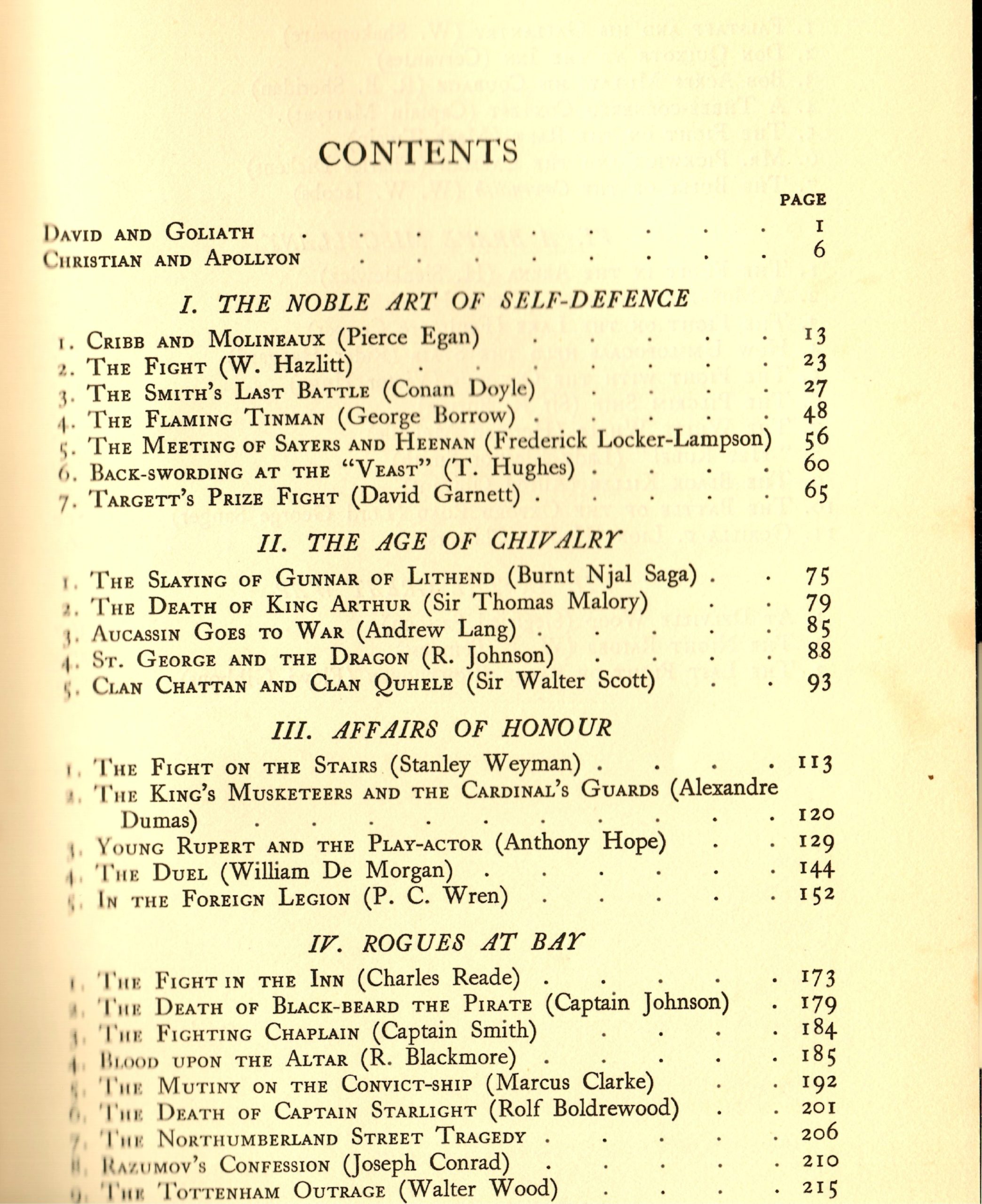
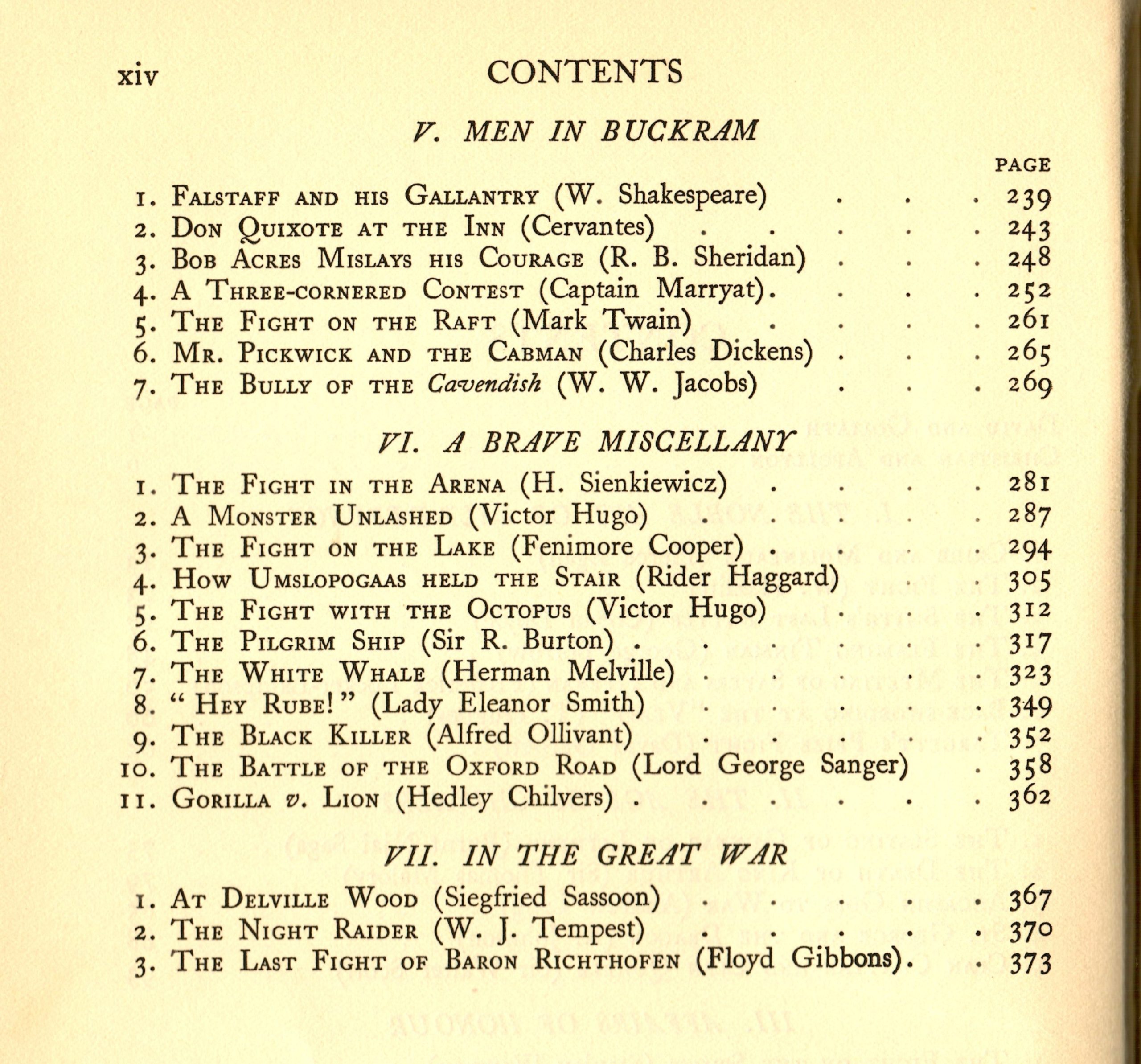
Birkenhead, 1st Earl of ‘Fifty Famous Fights in Fact and Fiction’ 1932 1st ed. 384-pages. Cassell and Company Limited. London, Toronto, Melbourne and Sydney. Printed in Great Britain by Butler and Tanner Ltd. Hartley’s Boxing Bibliography: “Boxing items include extracts from Boxiana, “The Fight” from Hazlitt’s essays, extracts from George Borrow’s Lavengro, Thomas Hughes From Brown’s Schooldays, and other literary works. Good condition in a good un-price clipped worn jacket.
Fifty Famous Fights in Fact and Fiction is a captivating historical anthology compiled and introduced by Frederick Edwin Smith, the 1st Earl of Birkenhead. Published shortly after his death, this collection synthesizes the thrill of both real historical conflicts and iconic literary battles.
Bibliographic Details:
• Title: Fifty Famous Fights in Fact and Fiction
• Compiler/Introducer: Frederick Edwin Smith, 1st Earl of Birkenhead
• Publisher: Cassell and Company Limited (London)
• Publication Date: 1932 (First Edition)
• Pagination: 284 pages (Note: Some standard trade editions extend to 384 pages depending on the specific binding/printing variant).
• Format: Octavo (8vo), hardcover.
Overview & Content:
The book brings together fifty dramatic encounters divided between historical accounts (“Fact”) and legendary or novelistic scenes (“Fiction”). It showcases Birkenhead’s deep appreciation for courage, strategic wit, and physical prowess.
The collection includes a diverse range of combat scenarios:
• Mythological & Biblical: Classic encounters such as St. George and the Dragon, King Arthur, and David vs. Goliath.
• Historical Conflict: Notable military engagements and real-life duels from global history.
• Literary Fiction: Handpicked, gripping combat sequences penned by master storytellers including William Shakespeare, Charles Dickens, Sir Walter Scott, H.G. Wells, Mark Twain, Joseph Conrad, and H. Rider Haggard (featuring the famous stair-holding battle scene of Umslopogaas).
Physical Description:
• Binding: The original publisher’s binding is typically finished in a sturdy black buckram or cloth, with the title, compiler’s name, and publisher cleanly blocked in gilt across the spine.