
Description
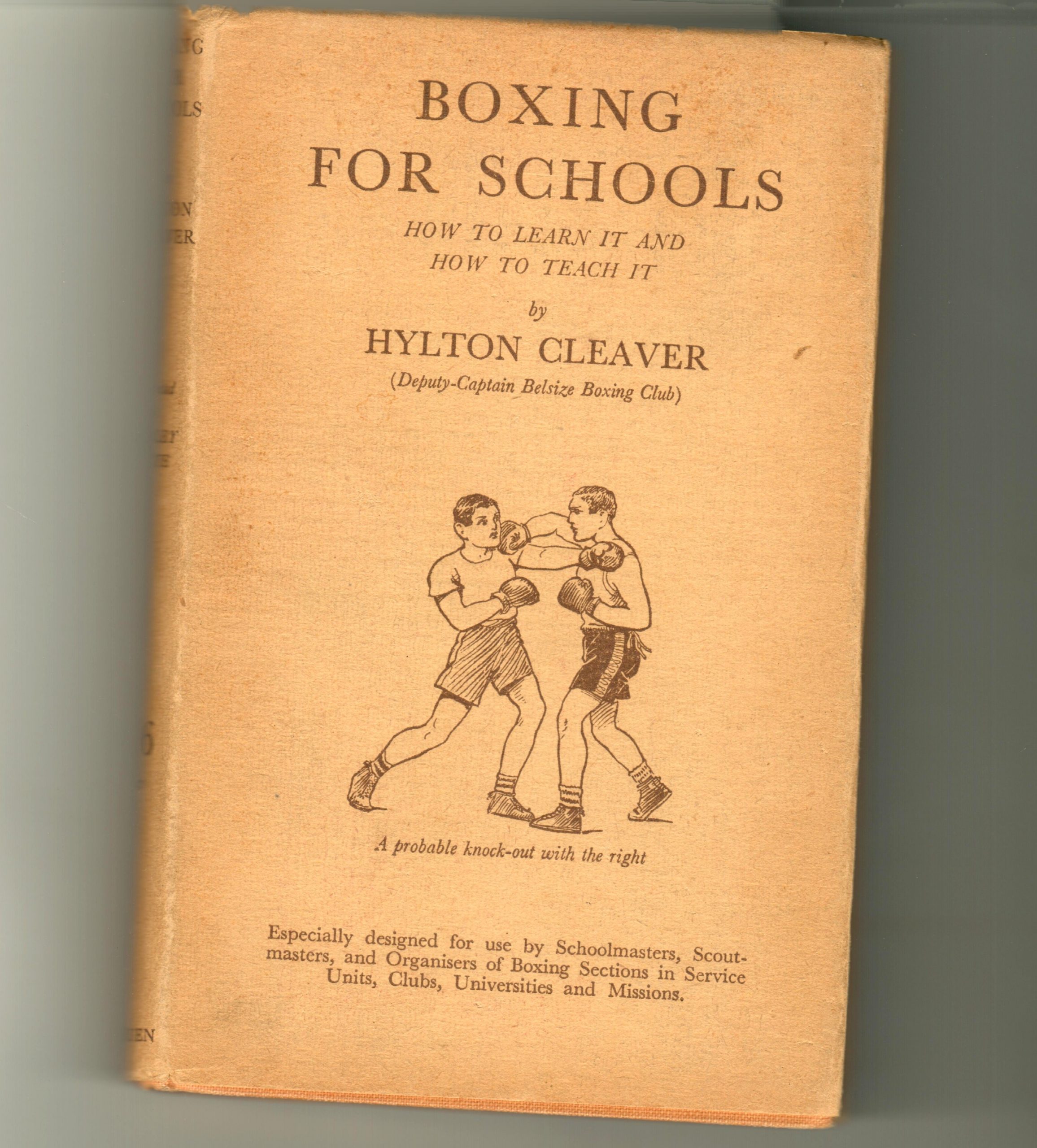
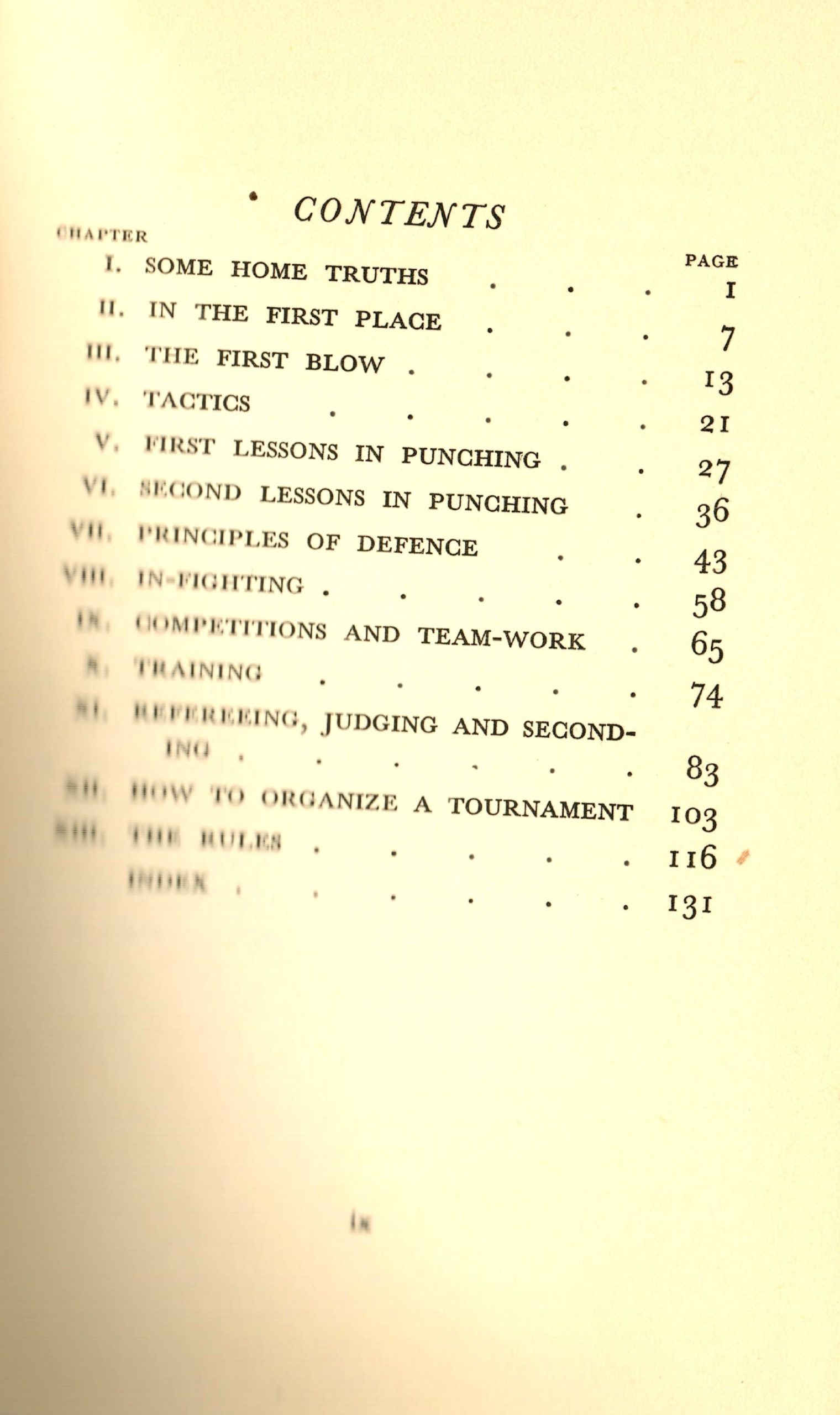
Cleaver, Hylton ‘Boxing for Schools. How to Learn It and How to Teach It. 1934 1st ed. 133-pages. VG in a VG scarce dust jacket. Hartley’s Boxing Bibliography: “Illustrated with 17 figures in the text by Stanley White. The book is an instructional manual written by Hylton Cleaver and published by Methuen & Co. Priced originally at 4s. 6d., the 134-page small-format handbook was specifically created as a structured guide for educators. At the time of its release, boxing was a standard, highly emphasized component of physical education for boys in British schools. It was championed for instilling discipline, self-control, and physical resilience. Target Audience: The manual was intentionally designed for use by schoolmasters, Scoutmasters, and organizers of boxing sections. Content Structure: Rather than being just a manual for self-defense, it provided a dual-purpose pedagogical approach: “How to learn it and how to teach it.” It broke down complex ring technicalities into simple, sequential lessons that could be easily organized in a school gym or club setting. Format: The book features a vibrant yellow cloth cover and is heavily illustrated throughout to give teachers clear visual anchors for proper stance, guard, and punch mechanics. Hylton Cleaver (1891–1961) was not a professional prize-fighter, but he possessed a unique intersection of athletic and literary credentials that made him uniquely qualified to write a definitive school sports manual: He was a highly respected Fleet Street sports journalist. He covered a wide array of British athletic disciplines, specializing in boxing, rugby, rowing, and equestrianism. He was known for deep technical understanding and regularly published technical columns like “Ringcraft at School: Long Range Boxing” in popular youth publications. He was one of the era’s most prolific and successful authors of British boarding school stories and boys’ adventure yarns. Literary critics noted that he described sports with “understanding details and great gusto,” establishing an elite reputation for capturing the psychology of schoolboy athleticism and competition. He was educated at St Paul’s School in London and later served in the Royal Fusiliers’ “Sportsmen’s Battalion” during World War I (earning a Military Cross). His immersion in the institutional culture of British sports and schools meant he intimately understood what headmasters expected regarding “character building” and how to properly organize structured physical training.”