Description
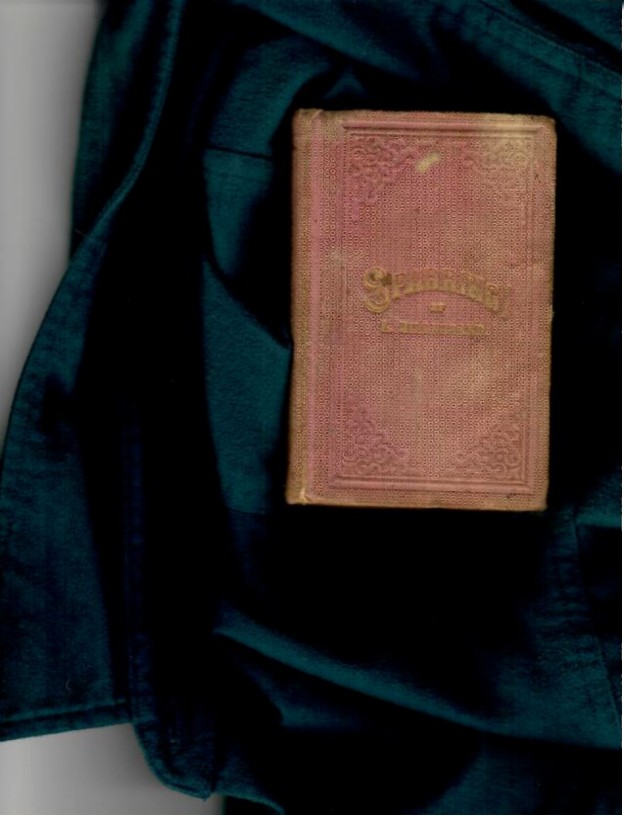
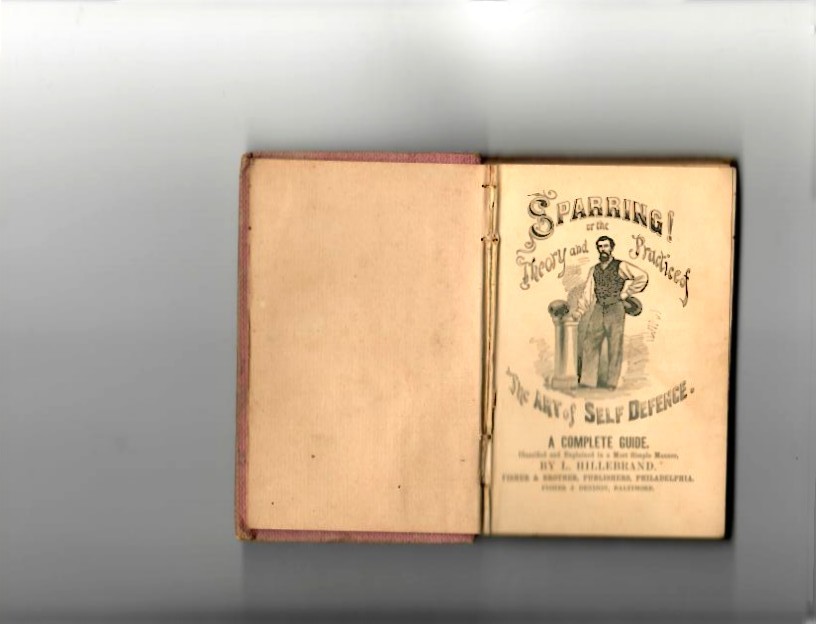
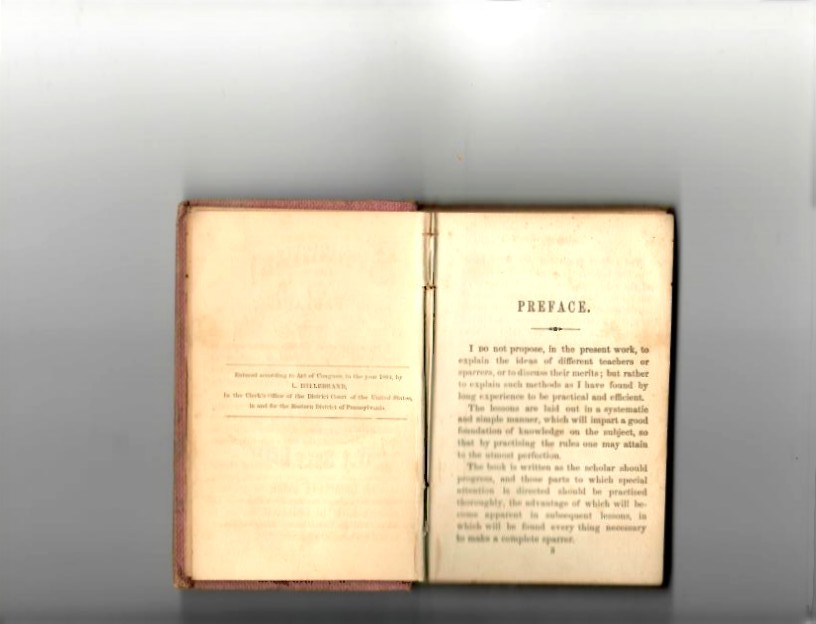
Hillebrand L. ‘Sparring or the Theory and Practice of the Art of Self Defence’ 1864 Philadelphia, PA. 136-pages. The five plates are intact. Interior is clean, straight with tight binding. Some foxing to pages as one would expect of an 1864 title. Faded covers, else good condition with tight binding and internally clean. Rare
The estimated market value of a true 1864 or 1865 first edition of Sparring! or, The Theory and Practice of the Art of Self Defence by L. Hillebrand in Good condition with sun-faded covers is between $300 and $500.Because this is a Civil War-era American boxing manual, it crosses over into several high-value collecting categories (early pugilism, 19th-century martial arts, and Americana), which keeps the baseline value high despite cosmetic cover wear.
Book Summary:
Published in Philadelphia by Fisher & Brother, this 150-page manual is an important historical artifact from the transition era between bare-knuckle prize fighting and early gloved boxing.
• The Stance and Strategy: Hillebrand emphasizes the technical and scientific approach to self-defense rather than brute force. It outlines the structural framework of the “Philadelphia Physical Institute”, championing boxing as a tool for physical fitness, mental discipline, and character building.
• The “Straight” vs. “Round” Blow: Historically, the book is famous among martial arts historians for its strict breakdown of proper mechanics. Hillebrand heavily advocates for short, straight, linear punches, explicitly warning that “round blows” (looping, swinging punches) are the universal tell of an unskilled, untrained street fighter.
• The Rules: It explicitly details instructions on footwork, parrying, blocking, and the rules of engagement required for structured “sparring” rather than a chaotic street brawl.
Value & Rarity Factors
• Rarity: This book is very rare in its original 1864 format. Most copies found today are modern digital facsimiles, print-on-demand paperbacks, or leather replicas. An original 19th-century copy is a prize for sports antiquarians.
• The Condition Impact: A grade of “Good” implies the book is structurally complete and tightly bound but has clear shelf wear. Fading to the cloth covers (often caused by sun exposure) is incredibly common for mid-1800s cloth bindings but will hold it back from the “Very Good/Fine” tier, which can easily top $750+.

Reviews
There are no reviews yet.